
On this day in military history…
On 11 August 1942 the Royal Navy suffered a major blow in the Mediterranean when the aircraft carrier HMS Eagle was torpedoed and sunk while taking part in Operation Pedestal, one of the most important and fiercely contested convoy operations of the Second World War. The mission was intended to force desperately needed supplies through to Malta, whose people and garrison were approaching a critical point after months of sustained Axis bombing and blockade. Malta’s position in the central Mediterranean made it vital to British operations against German and Italian supply routes to North Africa, but by the summer of 1942 fuel, ammunition, food and aircraft were running dangerously low.
HMS Eagle had originally been laid down during the First World War as the battleship Almirante Cochrane for the Chilean Navy, but the unfinished hull was purchased by Britain and converted into an aircraft carrier. Commissioned into the Royal Navy in 1924, she became one of Britain’s important early fleet carriers and gained extensive experience during the inter-war years. By the time the Second World War began she was already an ageing ship, but she remained extremely valuable, particularly in the Mediterranean where aircraft carriers were essential for protecting convoys and delivering fighter aircraft to Malta.
The carrier spent much of the early war operating in the Mediterranean and Indian Ocean. She took part in operations against Italian forces, provided fighter cover for British warships and convoys, and repeatedly helped ferry replacement aircraft to Malta. Her aircraft also carried out strikes against enemy shipping and shore positions. Despite her age and relatively modest speed compared with newer carriers, she proved to be a hard-working and dependable ship at a time when the Royal Navy could not afford to lose any carrier capability.
By August 1942 Malta’s situation had become so serious that the British assembled a huge naval force to escort a convoy from Gibraltar towards the island. Operation Pedestal included merchant ships carrying fuel, food and military supplies together with some of the Royal Navy’s most powerful warships. The convoy was protected by battleships, cruisers, destroyers and aircraft carriers, including HMS Victorious and HMS Indomitable. HMS Furious also accompanied the operation for part of the journey in order to fly additional Spitfire fighters to Malta.
The Axis powers knew that stopping the convoy could potentially force Malta into submission. German and Italian submarines, aircraft and surface forces were therefore prepared to attack the ships throughout their passage. The convoy entered the Mediterranean under constant threat, with the Royal Navy expecting heavy losses even before the most dangerous part of the journey had begun.
On the afternoon of 11 August, the carrier was sailing as part of the covering force north of Algeria when the German submarine U-73 managed to penetrate the defensive screen surrounding the fleet. Commanded by Kapitänleutnant Helmut Rosenbaum, U-73 manoeuvred into a firing position and launched a spread of torpedoes at the ship.
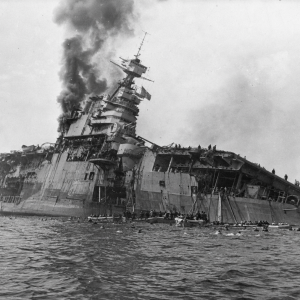
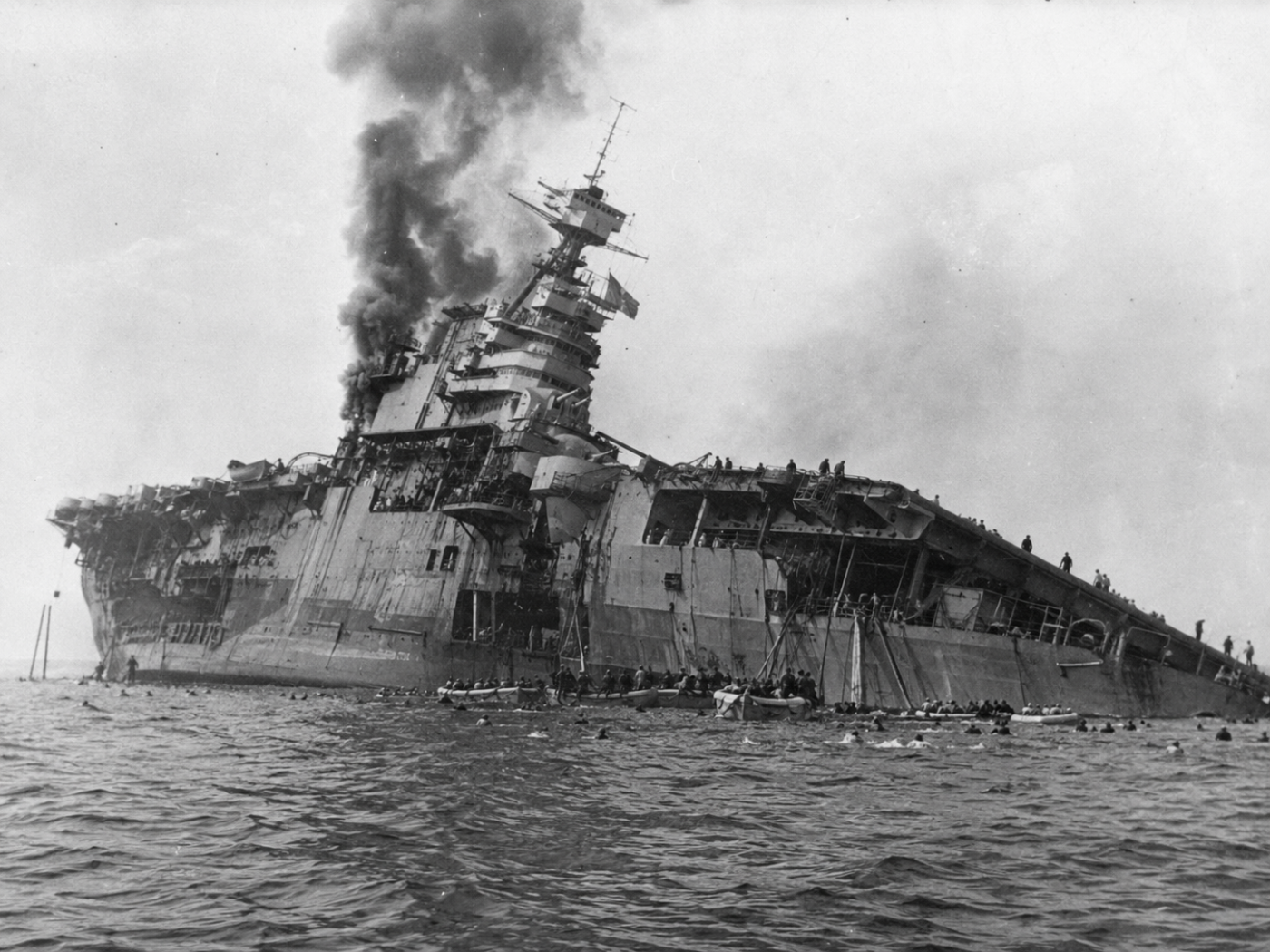
At approximately 1.15pm she was struck by four torpedoes in rapid succession. The explosions ripped into the starboard side, causing catastrophic flooding and giving the crew almost no time to react. The vessel developed a severe list almost immediately. Within only a few minutes she rolled over and sank beneath the Mediterranean.
The speed of the sinking was extraordinary. Men who had been working deep inside suddenly found passageways flooding or becoming impossible to escape from as the ship heeled over. Others were thrown into the sea or forced to jump from the rapidly tilting flight deck. Destroyers and other escort vessels immediately moved in to rescue survivors, despite the continuing danger from submarines and enemy aircraft.
More than 900 members of the crew were rescued, but around 160 men were lost. Considering how quickly the carrier sank, the survival of such a large proportion of her complement was remarkable. Many survivors were picked up covered in oil and surrounded by wreckage, while rescue vessels remained alert for the possibility of further torpedo attacks.
The destruction was also a serious operational loss. Her fighters had formed part of the convoy’s air defence, and with the ship gone the remaining vessels had to provide protection with fewer aircraft. The loss came before the convoy had even entered the narrow waters between Sicily and North Africa, where the most intense attacks were expected.
Despite the sinking, Operation Pedestal continued. On the same day HMS Furious flew off dozens of Spitfires which reached Malta and strengthened the island’s fighter defences. Over the following days the convoy endured relentless attacks from German and Italian aircraft, submarines and torpedo boats. Several warships and merchant vessels were sunk or badly damaged, including HMS Indomitable, which was struck by bombs and forced out of flying operations.
The most famous ship of the convoy became the American-built tanker Ohio, operated by the British. Carrying desperately needed aviation fuel, she suffered repeated bomb and torpedo damage and was eventually so badly damaged that she had to be supported between two destroyers as she was slowly brought into Malta. Her arrival, together with the surviving merchant ships, delivered enough supplies to prevent the island from being forced into surrender.
The loss therefore became part of a much larger battle for control of the Mediterranean. Operation Pedestal was extremely costly, but the supplies that reached Malta allowed the island to continue fighting. From Malta, British aircraft and submarines were able to intensify attacks on Axis shipping carrying fuel, ammunition and reinforcements to North Africa. These attacks contributed to the growing logistical problems faced by German and Italian forces before the battles that eventually drove the Axis out of North Africa.
The ship had served the Royal Navy for almost two decades before her loss. Although designed from the hull of a battleship conceived during the First World War, she became part of the new age of naval aviation and played an important role in the development and wartime use of aircraft carriers. During the Second World War she repeatedly operated in dangerous waters, protected convoys and delivered aircraft to Malta at a time when the island’s survival depended heavily on reinforcements arriving by sea.
Her sinking on 11 August 1942 demonstrated both the vulnerability of even a major warship to submarine attack and the enormous risks taken by the Royal Navy during the struggle to keep Malta supplied. Within minutes one of Britain’s most experienced carriers had disappeared beneath the Mediterranean, yet the convoy pressed on. The sacrifice of the ship and the other vessels lost during Operation Pedestal helped ensure that Malta survived, making the operation one of the most dramatic and important naval battles of the Mediterranean war.